

Carbon Filtration vs Reverse Osmosis Filtration: Which One Is Best For Your Water?
by
Dr. Jonathan Doyle - Updated December 08, 2025


When it comes to having absolutely pure and healthy drinking water, carbon filtration and reverse osmosis filtration happen to be two of the most popular methods in filtration technology. Although both methods are efficient in eliminating contaminants from water, they both function in different ways. Knowing how these two filter technologies compare can definitely help in deciding which water filtration technology works best in your Singapore household.
What Is Carbon Filtration?
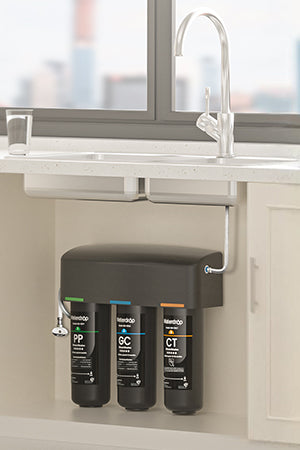
Carbon filtration is another popular water filtration technology that employs activated carbon to filter out impurities in water. Activated carbon, or activated charcoal, has a large surface area that binds impurities such as chlorine, Volatile Organic Compounds (VOCs) , pesticides, and heavy metals.
Filtration of this sort works well in terms of ensuring that the taste and odor of drinking water are enhanced. In fact, when water smells or tastes bad because of chlorine or other compounds, using a carbon filter can make a big difference. It can easily be found in water pitchers, sink-mounted filters, as well as under-sink filtration devices.
How Does Carbon Filtration Work?
Activated carbon utilizes the process of adsorption, which can be considered distinct from the process of absorption. Adsorption takes place when particles get held onto the surface of the carbon. Water moves through the activated carbon bed, and in the process, the impurities get "adsorbed" onto the surface of the activated carbon.
Advantages and Disadvantages of Carbon Filtration
Pros:
- Enhances taste and odor: Carbon filters are effective in removing chlorine and other contaminants which can affect the taste and smell of water.
- Low cost: These cartridges are less costly when compared to other filters.
- Ease of installation and maintenance: Most carbon filter systems can easily be installed and maintained.

Cons:
- Ineffective Filtration: Not all impurities are removed by carbon filters, including heavy metals, fluoride, and dissolved solids. Their main effectiveness lies in the reduction of organics and chlorine.
- Requires frequent replacement: With time, the carbon becomes filled with contaminants and thus requires frequent replacements.
What Is Reverse Osmosis Filtration?
Reverse osmosis (RO) is a rather complex process of water treatment using which pressurized water is forced through a semi-permeable membrane. Indeed, the size of the pores in this semi-permeable layer is so small that only water molecules can pass through it, despite the attempt of many other impurities like bacteria, viruses, salts, heavy metals, fluoride, and other dissolved substances.
Generally, the RO water filter is considered to be the "gold standard" in water filtration technology, particularly when it comes to eliminating many different types of harmful contaminants. For example, because reverse osmosis removes such a large percentage of impurities, the resulting water can easily be considered "pure" or "almost distilled."

How Does Reverse Osmosis Work?
In the case of reverse osmosis, water is first pre-filtered in order to remove larger particles such as sediment or chlorine. It is then pushed through the semi-permeable membrane. The impurities are left in the filter, and the water collects in a storage tank. In many cases, reverse osmosis systems will make use of post-filters in order to increase the taste of the water.
Advantages and Disadvantages of Reverse Osmosis Filtration
Pros:
- High contaminant removal: It can remove up to 99% of contaminants such as dissolved solids, heavy metals, and microorganisms.
- Enhances taste of water: The absence of chlorine, fluoride, or other impurities in RO water makes it taste better than tap water.
- Health benefits: The RO water is safer to drink and use in cooking because it removes harmful compounds.
Click here to learn more about Can You Drink Waste Water from Reverse Osmosis?
Cons:
- Wastes water: Conventional reverse osmosis filters tend to waste large amounts of water during the filtration process—typically 2 to 3 gallons of wastewater per gallon of filtered water produced.
- Slow filtration process: The filtration process in RO can be slower than carbon filtration because water needs to go through several stages of filtration.
- More expensive: Installation and maintenance costs of RO systems tend to be higher than carbon filtration systems.

Which Filtration System Is Right for You?
The most suitable water filtration system for you will vary based on your requirements and personal preference. The following are some factors to keep in mind:
If you are mostly concerned about your water taste and odor considerations:
You should go for a carbon filter. It costs less and works well to remove chlorine and other organic materials in water that cause taste and odor concerns.
For complete purification of water:
For complete water treatment, reverse osmosis is the most preferred choice. The process can eliminate numerous contaminants such as poisonous chemicals , salts, heavy metals, and microorganisms. In cases where water poses threats in the form of dissolved solids or fluoride, reverse osmosis works as the most preferred solution.
If you are working under a low budget:
Carbon filtration is cheaper than activated alumina. It works well at an economical cost but might need to be combined with other filtration technology in order to get the purest water.

In case there is water wastage:
Carbon filtration technology can be considered more environmentally friendly because it does not waste water, but the traditional RO process can result in water wastage. Newer generations of the RO process have taken steps to overcome this problem.
Why Consider Waterdrop Filters?
For the best filtration technology in Singapore, I recommend Waterdrop water filters . Waterdrop distributes both carbon filters and reverse osmosis filters; hence, the freedom to choose which suits your needs. Waterdrop filters are famous due to many benefits, including advanced technology, long-lasting filters, and ease of installation. If you want something as basic as a carbon filter or something as complex as an RO filter, Waterdrop has something for you.
Conclusion
To make a choice between carbon filtration and reverse osmosis filtration, you need to consider your personal needs regarding water quality. For example, if you want to remove chlorine from water or make it taste better, you can opt for carbon filtration. But if you want advanced filtration of water, you can opt for reverse osmosis filtration.
In any of these cases, having an effective filtration system can help ensure that you and your family members can enjoy clean drinking water. For this, there are plenty of filtration options like Waterdrop filters that can help you find the most suitable solution based on your needs.
Contaminants Detected in Fruitland Water
Special
Service District
30
Contaminants
EXCEED EWG HEALTH GUIDELINES
EXCEED EWG HEALTH GUIDELINES
30 Total Contaminants in Your Water
Water Provider
Fruitland Water Special Service DistrictPopulation Affected
120,000Water Source
Ground waterExceeds Guidelines
Others Detected
Thank You For Subscribing!
We are thrilled to have you on board and look forward to
sharing
exciting updates, exclusive offers, and valuable insights with you.