

What Are Osmosis and Reverse Osmosis? A Simple Guide for Singaporeans
by
Dr. Jonathan Doyle - Updated December 05, 2025


Water, the silent sustainer of life, has many secrets to be revealed—most of which lie in the purification and treatment of this vital liquid and the effect of the purified drinking water you consume daily. Two rather popular concepts used in discussions about water treatment are osmosis and reverse osmosis. What do they actually mean?
In this article, we shall dissect the science of osmosis and reverse osmosis, demonstrating their principles and applications and observing the role of reverse osmosis in the critical quest of Singapore to obtain purified and clean water. Additionally, the ability of water filters, such as the Waterdrop filter, to improve the quality of drinking water will be observed.
What is Osmosis?
Osmosis occurs naturally: Water diffuses from a region of low solute concentration to a region of high solute concentration through a semipermeable membrane . The purpose of the process is to equalize the amounts of the solutes salt and sugar in both regions.
Think about this: there's a membrane separating two solutions: one side has only water, and the other has a salty solution. The water diffuses through the membrane to the salty solution until the levels of salt and water are fairly equal.

Osmosis in Everyday Life
In our own bodies, the process of osmosis also helps to regulate the balance of our cells. It controls the movement of water in and out of the cells to ensure that they do not get too large due to the uptake of water. In plants, the process of osmosis helps water move from the roots to the leaves. This helps the leaves remain "hydrated" and "healthy" and allows them to carry out important functions.
What is Reverse Osmosis?
Reverse Osmosis (RO) reverses the situation. In RO, the water will move from the side of the higher solute concentration to the side of the lower solute concentration. This occurs through the application of pressure and the use of a semipermeable membrane. In this case, the pressure will force the water to move against its natural tendency.
This technique has been widely employed to remove contaminants from water—chlorine, fluoride, heavy metals, bacteria. The membrane essentially works as a gatekeeper that allows the passage of clear water molecules while keeping the undesirables at bay.
Click here to learn more about Can You Drink Waste Water from Reverse Osmosis?
The Reverse Osmosis Process of an RO Filter
A simple explanation of RO in a water filtration system:
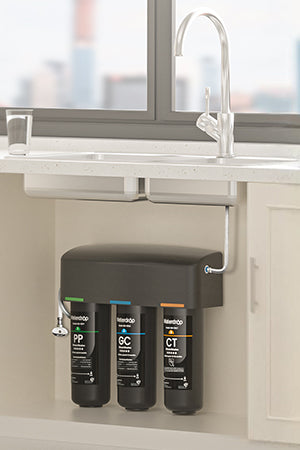
- Pre-filter: The pre-filter is the first step of the filtration process through which the water passes before being filtered. The main purpose of the pre-filter is to remove larger particles.
- RO Membrane: The water goes through the RO membrane. In this membrane, the smaller contaminants of salts, minerals, etc., are removed.
- Post-Filtration: A post-filter follows the membrane filter that eliminates remaining contaminants and enhances the taste of the water.
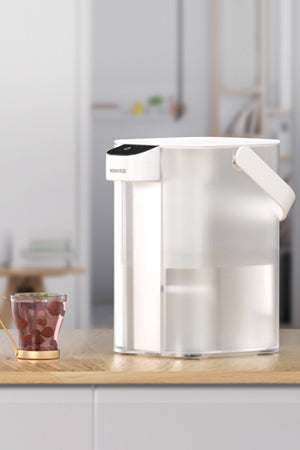
- Storage: The purified water will be stored in a clean water storage tank. For Waterdrop Tankless RO Systems , there is no storage tank, avoiding second contamination.

The Advantages of Reverse Osmosis to Singaporeans
Singaporeans can also be grateful that their tap water remains safe enough to drink. However, the possibility of contaminants existing in the water has always lingered. Reverse osmosis provides a reliable way to guarantee the quality of drinking water by removing harmful materials.
Removes Harmful Contaminants
RO has excellent removal abilities when it comes to chlorine, heavy metals, pesticides, and bacteria, which makes it an excellent option for anyone concerned about the quality of their tap water.
Related article: Chlorine in Our Tap Water? What You Need to Know
Enhanced Aroma & Flavor
Chlorine and various other chemicals can also impart color to the taste and aroma of water. RO helps eliminate this from water, making it taste fresh and clean.
Health Benefits
By removing contaminants from the water through RO, you will be assured of staying hydrated and drinking fresh and clean water, which is important to families to ensure that adults and kids drink healthily.
Suitable for Singapore's Water Supply
The treatment standards of Singapore's water are high, but the sources of the national water being imported and desalinated mean that there might be trace contaminants. RO can be an excellent secondary treatment solution to purify the water.

Reasons to Choose Waterdrop Reverse Osmosis Systems
Reverse osmosis can be quite effective, though not all RO filters are the same. Waterdrop provides RO filters of good quality to filter water efficiently. The product line prioritizes efficiency and has been optimized to work in Singaporean homes.
Effective Filtration
The Waterdrop X12 RO System adopts a multi-stage filtration technique to eliminate chlorine, lead, fluoride, and other toxic materials.
Portable and User-Friendly
They come in a compact form factor that perfectly fits homes with minimal space. The installation process is also simple. This makes it easy to access clean water.
Environmentally Friendly
Using a Waterdrop RO system helps cut down the usage of bottled water and thus reduces plastic usage.
Cost-Effective
In the long run, a good RO water system will save you the costs of bottled water while also providing you with filtered water at home whenever you want.
Takeaway
Osmosis and reverse osmosis will allow you to be better informed about the water you drink. Reverse osmosis can be said to be the most effective method of ensuring the water you drink is purified from harmful materials because Waterdrop's advanced RO system provides a convenient and reliable solution in Singapore. A reverse osmosis system investment extends far beyond the taste—it's an investment in the health of your family.
Contaminants Detected in Fruitland Water
Special
Service District
30
Contaminants
EXCEED EWG HEALTH GUIDELINES
EXCEED EWG HEALTH GUIDELINES
30 Total Contaminants in Your Water
Water Provider
Fruitland Water Special Service DistrictPopulation Affected
120,000Water Source
Ground waterExceeds Guidelines
Others Detected
Thank You For Subscribing!
We are thrilled to have you on board and look forward to
sharing
exciting updates, exclusive offers, and valuable insights with you.