

Does Boiling Water Kill All Bacteria?
by
Dr. Jonathan Doyle - Updated December 05, 2025


Water is the essence of living, but its quality isn't always as simple as we think. Whether you are boiling it for a hot cup of tea or purifying it enough to cook, it's often assumed that boiling the water will kill off all the bacteria. However, the situation isn't quite this simple. Although boiling can kill many bacteria that are harmful to you, it will not necessarily kill off all microorganisms.
In this article, we will see whether boiling kills bacteria completely, the level of protection it provides against bacteria, and whether there's also a need to purify the water properly enough to drink. We will also catch a glimpse of advanced water filters, known as Waterdrop filters, which provide an additional level of protection against harmful bacteria.
What Occurs When You Boil Water?
Boiling water: This method is simple and effective in destroying microscopic organisms . This method involves boiling water until microorganisms lose their form and function due to the heat. This method has a boiling point of 100°C (212°F). Under this high temperature, the protein found in microorganisms denatures and becomes ineffective.
In many instances, boiling water makes it possible to safely drink it. However, not all bacteria can be broken apart through the same method of boiling.
The Science of Boiling Water
When water is heated, the molecules move violently, disrupting the microscopic functions of bacteria, viruses, and other microorganisms. Most harmful microorganisms will be killed at about 70°C (158°F) and a few minutes' exposure. However, resistant microorganisms, such as the Clostridium family of bacteria and Giardia protozoa , can withstand the temperatures if their concentrations are high

A boil of about 1-3 minutes kills almost all bacteria and pathogens. A longer boil of about 3-5 minutes can be used at higher altitudes, where the boiling point of water will be lower.
What Kind of Bacteria and Viruses Are Killed by Boiling Water?
Boiling makes water safe from the vast majority of pathogens found in untreated or contaminated water. The following are some of the common culprits that boiling can eliminate:
1. Bacteria
- Escherichia coli: May cause food poisoning and severe gastrointestinal illness.
- Salmonella: This causes food poisoning involving diarrhea, fever, and abdominal cramps.
- Campylobacter: Commonly isolated from contaminated water and can cause GI illness.
- Shigella: Shigella causes shigellosis.
Related article: Is It Better to Drink Boiled Water or Filtered Water?
2. Viruses
- Norovirus: Highly contagious. Symptoms: vomiting, diarrhea, abdominal cramps.
- Hepatitis A: Can lead to liver problems, often through contaminated water.
- Rotavirus: It leads to severe diarrhea in infants and toddlers.

3. Parasites
- Giardia: Results in giardiasis, which leads to poor health.
- Cryptosporidium: Resistant to chlorines.
- Entamoeba histolytica : This organism causes amoebic dysentery.
What Kind of Pathogens Won't Boiling Water Kill?
Boiling can be very effective, though it's not omnipotent. Some bacteria and viruses are hard to kill even by boiling.
1. Heat-Resistant Bacteria
Some species of Clostridium (would-be botuliners) and a strain of Bacillus, Bacillus cereus, produce spores that are hardy enough to survive
2. Some Parasites
Although boiling can destroy most of the parasites, Cryptosporidium has been found to be resistant to high temperatures and chlorination. In fact, additional methods of purification may be needed.
3. Highly Resistant Viruses
Some viruses (certain hepatitis viruses and polio viruses) are more resistant to heat than others. Boiling will help kill them but will not necessarily finish them off.
Why Boiling May Be Inadequate
Boiling will kill many microorganisms but it will not be the best possible method of producing safe drinkable water. This is because:

1. Boiling Doesn't Remove Chemicals
Heat will kill bacteria but not remove chemicals, heavy metals, and contaminants. If you notice that the quality of the water from the tap has been compromised due to the presence of chlorine, lead, or pesticides, boiling the water will do nothing to eliminate the contaminants. In fact, boiling will cause them
Click here if you want to learn more about Is It Safe to Drink Filtered Water Without Boiling?
2. Boiling May Not Be Feasible
This can be time-consuming when boiling large amounts of water, especially during emergencies.
3. Inconsistent Boiling Points
The boiling point will be affected by the equipment used. Higher boiling points can be unsafe at higher altitudes because the boiling point will be insufficient to kill bacteria. Poorly insulated boiling equipment can also provide temperatures that are inadequate.
Best Way to Ensure Your Drinking Water Safety
For a deeper purification, the following additional methods can be used:
RO Water Filtration Systems
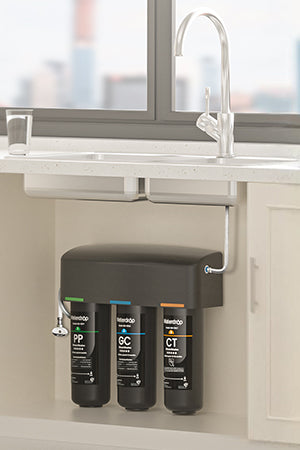
An efficient filtration system can remove contaminants much larger than microorganisms. Reverse osmosis water filters , also known as RO filters (such as the Waterdrop Reverse Osmosis filter), can efficiently remove bacteria, chemicals, heavy metals, and many other contaminants.
They do this through the utilization of the semipermeable membrane to filter the water. Waterdrop RO filters can be especially helpful in Singapore because the water from the taps is considered safe but might be contaminated to a slight extent or taste differently at times. This filtration system will ensure that the drinking water doesn't contain bacteria and various other contaminants.
UV Water Purifiers
The ultraviolet (UV) purifier kills bacteria, viruses, and microorganisms through the use of UV lights. This method is efficient, rapid, and reliable but doesn't work to remove chemicals and sediment. The combination of filtration (such as RO) and the technique of using UV can be an efficient method of purification.
Distillation
Distillation involves boiling the water before condensing the steam back to form liquid water while leaving the contaminants behind. This method works perfectly against microorganisms but also results in the removal of valuable minerals that some individuals wish to retain.
In A Word
Boiling water is a reliable technique to kill almost all harmful bacteria, viruses, and parasites; however, it's not completely reliable. Some microorganisms can survive the boiling procedure, and boiling will not help eliminate the chemicals. The best approach to eliminate both biological and chemical risks is to boil the water along with the help of filters like reverse osmosis.
In Singapore, where the water quality is already pretty good, you can consider investing in a quality filtration system such as Waterdrop to ensure the quality of the water you drink. By combining boiling and filtration, you would be drinking the cleanest possible water.
Contaminants Detected in Fruitland Water
Special
Service District
30
Contaminants
EXCEED EWG HEALTH GUIDELINES
EXCEED EWG HEALTH GUIDELINES
30 Total Contaminants in Your Water
Water Provider
Fruitland Water Special Service DistrictPopulation Affected
120,000Water Source
Ground waterExceeds Guidelines
Others Detected
Thank You For Subscribing!
We are thrilled to have you on board and look forward to
sharing
exciting updates, exclusive offers, and valuable insights with you.