

How to Remove Fluoride from Drinking Water?
by
Dr. Jonathan Doyle - Updated February 02, 2026


There are also some disputes about whether or not to have fluorides within drinking water. Some consider it a nutrient that can protect a person from dental cavities, while others consider it a contaminant that can cause some harm to their health. If that is what you believe in, one of your main goals should be to know how to eliminate fluorides within your tap water.
What Is Fluoride?
Fluoride is a naturally occurring element. It helps in maintaining the health of the teeth by preventing tooth decay and enhancing the enamel of the teeth. It is naturally present in many foods, plants, water (both saltwater and freshwater), soil, and air.
Why Is Water Treated with Fluoride?
The addition of fluoride to public water supplies is called water fluoridation, which is primarily conducted to decrease the incidence of dental caries among the residents. Fluoride works as a preventive agent for the degradation of enamel by making enamel more resistant to the acidic attacks of bacteria in the mouth. Although fluoride toothpaste is easily available in the market, water fluoridation has been proved to be a very important step towards enhancing oral health among the residents.
There have been a number of studies that have shown that fluoride added to drinking water can reduce tooth decay . This is because it is consistent with fluoridating community water supplies. Many organizations have advocated for water fluoridation as a safe and affordable way of reducing tooth decay.
Does Water Containing Fluoride Pose a Health Risk?
The compound, in its natural and synthesized form, is a safe and effective means of promoting good oral health. Yet, in its overuse, it can cause harm in the form of dental fluorosis, which can stain and ruin teeth.
Dental Health
This occurs when the tooth forms with too much fluoride, which causes the enamel to appear different, leading to the tooth developing brown spots, white spots, or lines. This can progress to pitting on the surface of the tooth.

Skeletal Health
It is a condition whereby the bones in the body contain excessive amounts of fluoride. This makes the joints stiff, causing pains and breakages in the joints and bones. This disease is common in places where fluoride is abundant in water.
Thyroid Dysfunction
Some studies indicate that too much consumption of fluoride could inhibit thyroid function, thereby causing goiter, hypothyroidism, and thyroid problems.
Neurological Effects
Elevated exposure to fluoride has been associated with potential issues in cognitive function, especially in children. Fluoride exposure has been linked to lower IQ, although the findings are not conclusive.
Click here if you want to learn more about Is It Safe to Drink Filtered Water Without Boiling?
Does Boiling Water Remove Fluoride?
Although fluoride in recommended quantities is deemed safe for ingestion, you can decide not to include fluoride in your drinking water for various reasons related to your health and preferences. The first thing that comes into your mind is boiling your tap water in order to achieve your goal. Is boiling tap water an effective means of removing fluoride?
The Centers for Disease Control and Prevention claim that the response to this question is “no.” Boiling tap water may eliminate some contaminants, pathogens, or bacteria; however, it won’t have an impact on fluoride. This is because fluoride is stable; it doesn’t vaporize when it is boiled. The good news is that there are more efficient techniques to remove fluoride from your water supply.

Methods for Removing Fluoride: The Best Fluoride Water Filter for You
Reverse Osmosis
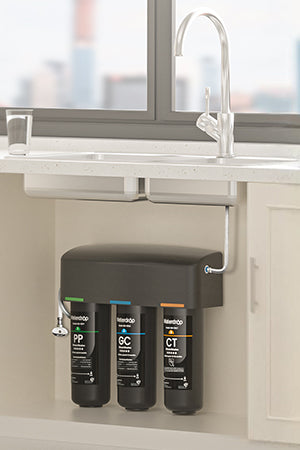
Reverse osmosis filtration is considered one of the most effective ways of purifying fluoridated water. The RO filtration system involves the use of a semi-permeable membrane that holds back the impurities while passing water molecules. The fluoride ions, solids, and other impurities are retained on one side of the membrane, while the filtered water is obtained on the other side as source water passes through the system under pressure.
Ion Exchange
Owing to their high attraction between fluoride ions and resin beads, another effective technique for fluoride reduction is ion exchange. For this process, negatively charged fluoride ions in water are attracted to and bound by resin beads that contain positively charged ions. As water passes through the resin bed, fluoride ions are removed as a result of an exchange for positively charged ions in resin. This process continues until the resin is fully saturated with fluoride ions, which then requires regeneration or replacement.
Deionization
Deionization is mainly used in laboratory or industrial applications and is not typically recommended for household drinking water. Deionization is the use of ion exchange resins that remove all the ions from the water, going beyond the normal ion exchange process.
In deionization, water is passed through a bed of resins that have both positive and negative charges. The fluoride ions are attracted to the charged sites of the resin and are replaced by other ions in the water, thereby reducing the fluoride concentration.

How to Check Your Fluoride Level?
If you have concerns about possible health dangers mentioned earlier, you may want to know if you have high fluoride content in your water. Several methods can help. First, if you have municipal water, a free report of local water quality is available from the government or water treatment plant. Second, you can test it yourself if you have well water.
Fluoride Meter
A fluoride meter is a device that measures the amount of fluoride in water using electricity. There is a detailed tutorial on how to use a fluoride meter. Although a fluoride meter is a reliable device for testing the amount of fluoride in water, it can be costly. It may not always be a good idea to spend money on a device that will only test the water a couple of times.
Water Testing
Do not use the test strips labeled as fluoride detectors; they don't work for fluoride. If you want to know the fluoride content in the water, you'll need to send the water sample to a laboratory for a fluoride test. A comprehensive water test will provide you with all the details about your water quality; it's an added advantage that you get to know the fluoride content as well.
However, in order to pick the best whole house water filter or under sink filtration system for the overall health and wellness of your family, you have to understand the level of cleanliness of the water, particularly if the water comes from a well.
Contaminants Detected in Fruitland Water
Special
Service District
30
Contaminants
EXCEED EWG HEALTH GUIDELINES
EXCEED EWG HEALTH GUIDELINES
30 Total Contaminants in Your Water
Water Provider
Fruitland Water Special Service DistrictPopulation Affected
120,000Water Source
Ground waterExceeds Guidelines
Others Detected
Thank You For Subscribing!
We are thrilled to have you on board and look forward to
sharing
exciting updates, exclusive offers, and valuable insights with you.